







youtube.com/watch?v=1RKdC7zje1Y&feature=youtu.be
In March 2026, Lyla Latif delivered a training session to over 100 participants drawn from West African states, focusing on the digital economy and its taxation. The session examined the structural challenges that digital business models pose to conventional tax frameworks, with particular attention to the domestic resource mobilisation implications for revenue authorities and policymakers across the region.
https://www.youtube.com/watch?v=L0QjBPUVZhw
This session examines gender bias in tax policy across three distinct registers: explicit bias encoded in law, implicit bias arising from formally neutral provisions that interact with unequal social structures, and a third category proposed by Lyla Latif — algorithmic bias, whereby AI systems deployed in tax administration, education financing, and health governance reproduce and entrench gender inequalities through data that was never designed to account for women's economic lives. Drawing on case studies from the Netherlands, the United States, and across Africa, the session mapped the gendered fiscal consequences of digital services taxation, extractive sector incentives, and AI-driven audit and resource allocation systems, offering participants a practical framework for identifying bias across all three dimensions within their own jurisdictions.
https://www.youtube.com/watch?v=OSNrrlRlP9c
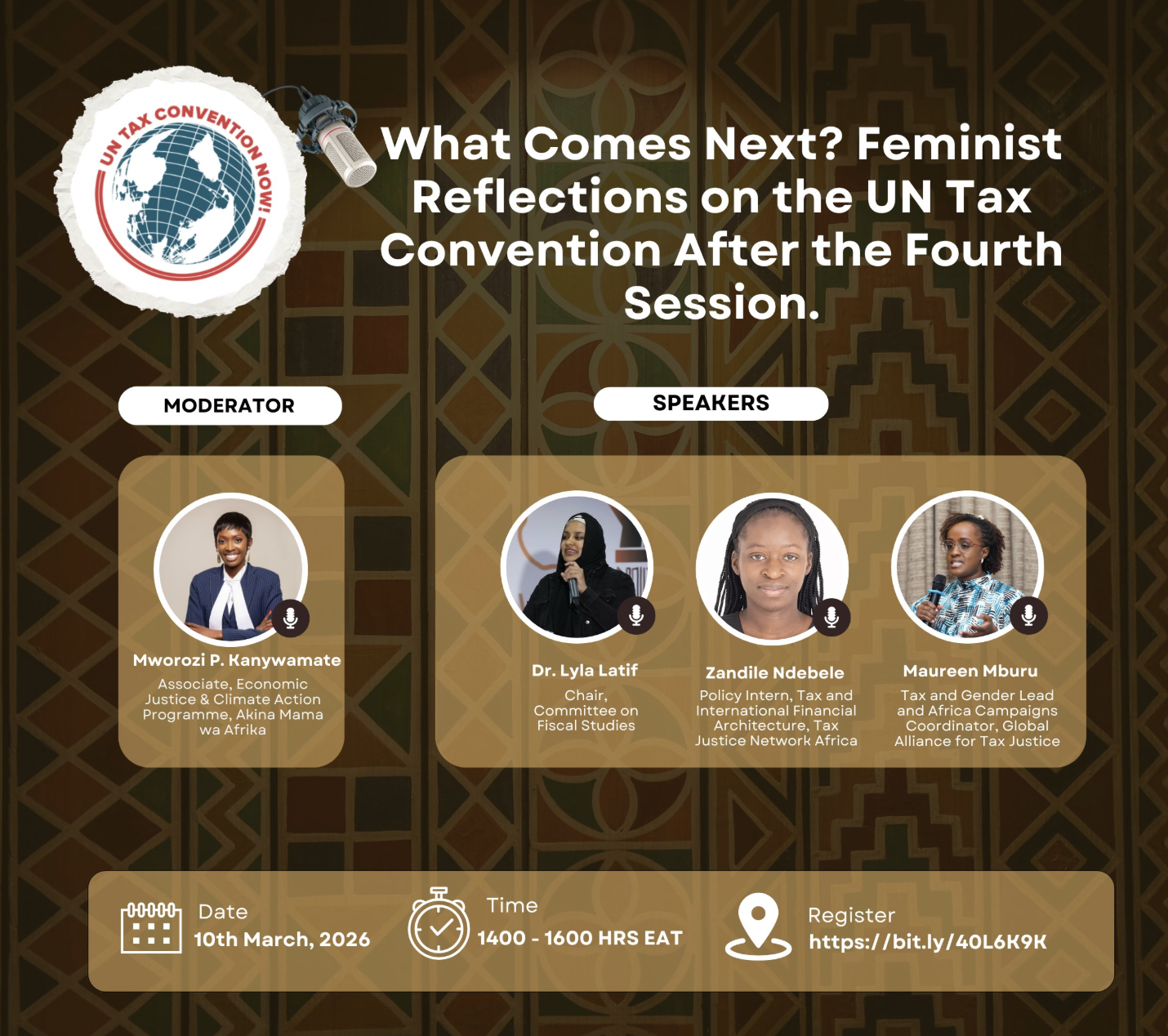
This session unpacked the key outcomes of the 4th session of the Intergovernmental Negotiating Committee (INC) on the UN Framework Convention on International Tax Cooperation (UNFCITC) from a decolonial pan-African feminist perspective, assessed the gender justice implications of the draft articles and protocols, strategised around priority demands for Africa, and the opportunities that remain to influence the process through to its conclusion.