






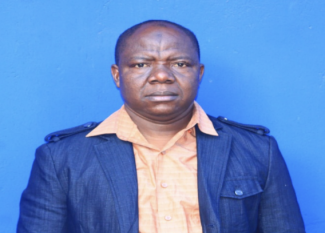
Foday Kamara is a Sierra Leonean economist with 17 years of experience spanning private and public sectors. He currently serves as Senior Economist at the Ministry of Finance (Research and Delivery Division), where he conducts objective policy research and analysis, collects and analyzes data, disseminates findings through seminars and conferences, and delivers capacity-building training for ministry staff and other government agencies. His career began as a Lecturer and Head of Business Management at the Institution of Advanced Management and Technology (now University of Management and Technology). He later worked as a Banker at Union Trust Bank Limited before joining the civil service in 2016 as an Economist at the Ministry of Planning and Economic Development (Planning, Policy and Research Division, 2016–2019), while also lecturing in public financial management at the Civil Service Training College. He was promoted to Senior Economist in 2019.Kamara is a PhD candidate in Economics at the University of Nairobi, Kenya, with his thesis titled Economic Growth in Sierra Leone: The Role of Exchange Rates, Fiscal Sustainability, and Economic Growth. His recent publications include "Exploring the Impact of Fiscal Sustainability on Economic Growth: Evidence from Sierra Leone" and "An Empirical Investigation of the Current Account Balance and Economic Growth in Sierra Leone: Evidence from GARCH-Model and VEC-Model." He has also contributed to collaborative research, such as on Digital Financial Services in Sierra Leone.He holds an M.Sc. in Economics, an MBA in Finance, and a B.Sc. in Economics (Ed.) from Njala University. Kamara is affiliated with organizations including the Econometric Society, IMF’s Africa Training Institute, Committee on Fiscal Studies, Economic Association of Sierra Leone, and Centre for Economic Policy and Development Research.