







Young Researchers Mentorship Programme
We invite all students, globally, to apply to our mentorship program. Matching is key to the success of our program. We get to know new candidates through observations obtained during interviews and application input. We then use this information about common interests, experience and some personality characteristics to identify and then to match potential mentor/mentee pairs. We have an experienced small team of interviewers and matchers who have been working together for the five years the program has existed.
Once all pairing is completed the program begins. As the program launches our mentees bring their ideas about goals and objectives they would like to accomplish and their paired mentor then begins providing guidance, sharing professional development experience and participate in candid conversations intended to build confidence, trust and we hope, a lasting relationship. At each step, it is always the mentee that drives towards their own goals and objectives. They consider the guidance, suggestions and alternatives from their mentors, but how to proceed is always their decision.
Our mentees are trained on:
- Research methodologies and reviewing literature
- Academic writing and rapporteuring
- Writing blogs, policy briefs, research papers and journal articles
- Designing primers
- Developing course content and training materials
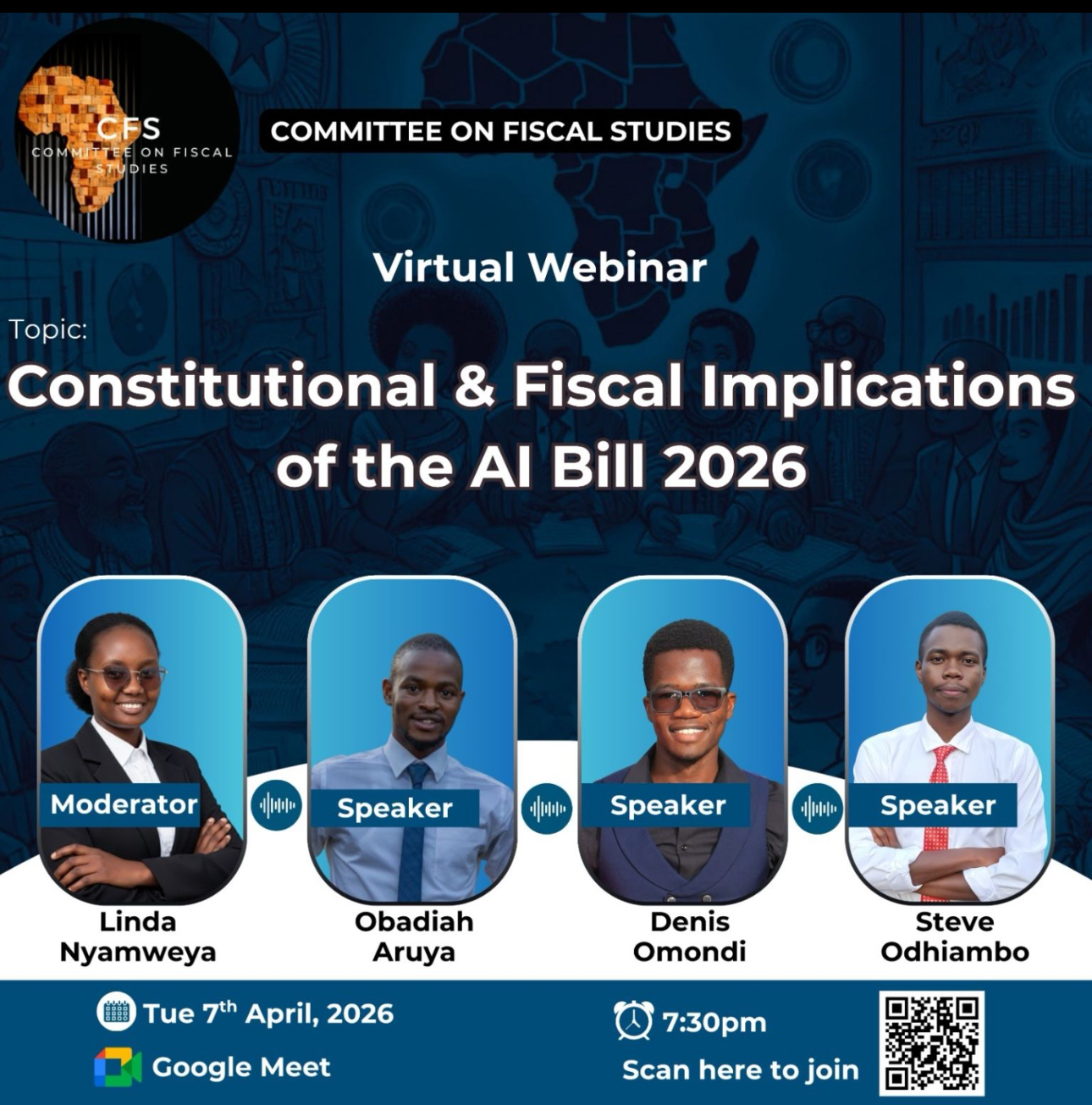
- Moderating our tax talks and presenting their research at conferences
- Attending high level meetings with their mentors
- Networking with CFS partners
Before the end of their mentorship, CFS ensures that mentees have:
- Attended and presented at a conference, workshop or at a meeting
- Written a blog and a policy brief
- Published an article either authored on their own or co-authored with their mentor
- Hosted and moderated our Tax Talks
- Attended some of our Hybrid Certificate Courses
Our first cohort of mentees launched the Fiscal Studies Students Association (FISSA) as a platform for peer to peer learning and engagement. Through FISSA, CFS has supported capacity building on tax literacy to enable students participate in Kenya's budget decisions and hold government accountable on its spending policy.
To apply for our Mentorship Program, email: latif@uonbi.ac.ke